
Albania, Kosovo, North Macedonia & Montenegro: Four Balkan countries “under construction” (1-5/09/25).
.JPG/v1/fill/w_320,h_320/file.jpg)
Updated: Oct 12, 2025
Translation disclaimer: This page was translated using automated software for your convenience. No guarantee is given regarding the accuracy of the translation. The content will be manually reviewed later.
Two countries in a day. During three days. Madness. But still. After Croatia and Bosnia, I've developed a taste for the Balkans. Due to time constraints, I'm traveling solo to see some of the highlights in these four countries.

From the airport I take the shuttle bus (400 LHH, = 4€) to Tirana center.
Luckily I have

exchanged a small amount for a bus, though it turns out I can pay everywhere with euros and cards the next few days. The bus station is near my cheap hotel and the enormous, sprawling Skanderbeg Square , surrounded by only tall modern hotel buildings like the Plaza Tower, ministries, the National History Museum, and an Opera and Ballet Theatre. Centrally located is the statue of Skanderbeg , a highly revered folk and resistance hero from the 15th century. There are statues of him in London, Paris, Geneva, Brussels, and everywhere where large Albanian communities reside, because don't underestimate the historical importance of his resistance to the Ottoman sieges for almost the entire Balkan region.

A group of musicians plays klezmer-style music that even gets a few tourists dancing. In one corner of the square stands a clock tower, with the beautiful Et'hem Bey Mosque and its minaret in front of it. The square is impressively spacious, the center lively, and traffic on wide avenues and streets rather heavy, but, yes, this seems like a rather vibrant city.
At 7:00 sharp, I wait for Xhulio , our driver and guide. " Our ," yes, because a minimum of two people are always required for this booked concept. So I share the car with Sanija , a somewhat plump young Turkish woman who doesn't speak a word of English, whom we pick up in the seaside resort of Dürres .

Xhulio (28) is a barrel full of wisdom and opinions. During the many trips we don't stop talking about the history, culture, wars and politics of these countries. The language, traditions, religion, the food, there is so much to tell... More specifically about that breeding ground of conflicts that have always dominated the Balkans, the restoration of communism, etc. ... These countries have had a very intense and complicated history, especially in the last century. From Alexander the Great via Tito to the rapprochement with Europe. And we orate together at length about Trump, global warming, fake news, free speech, pollution and many current topics. To conclude that we are of the same mind spirit .

With our Turkish companion on board, however, occasional "conversations" are, unfortunately, limited to moments where Xhulio speaks English through a translation app and then shows her the translation on his phone. So, two communication speeds. But he does use his phone constantly to read Google Maps, text, and call, device in hand, ... while driving. Brrr, takes some getting used to.

Speaking of driving: with a maximum of 100km/h on highways and usually

At 80 km/h, it's easily a 3.5-hour drive to Ohrid , on Lake Ohrid, the largest, highest, deepest, and oldest in the Balkans. A pleasant spot on the shores of the Macedonian side. The border with Albania runs through the middle of the lake. I'd already learned at the airport that border controls are taken seriously here, and it was no different here. Ohrid is a charming town with a typical mix of religious and cultural influences, the most important of which are Ottoman (mosques) and Orthodox (lovely Byzantine churches).

And thanks to its (pebble) beaches, clean water, and climate, it's also a popular holiday destination. According to UNESCO, it's one of the oldest human settlements in Europe. For centuries, it was a crossroads of diverse traditions, cultures, and… invasions. It's also called the " Jerusalem of the Balkans " and played a major role in the spread of Slavic Orthodoxy. It boasts 365 churches, one for each day of the week, dating back to the 11th century .
We climb from the ancient theatre to Samuel's Fort which dominates the town. Wonderful

Views over the lake. Then we descend through pine forests for a unique postcard view of the small church of Saint Jovan with the blue water, some boats, and low mountains as a backdrop. Then, past sunbathers on loungers, swimmers, bars, and boats along the boardwalk —a kind of wooden jetty built into the mountainside—we dive into the bazaar district. We have lunch there, and I pay the equivalent of €6.50 for a local white bean dish with Turkish sausage and two sparkling waters.
Then two and a half hours through mountains and valleys, slaloming to the capital, Skopje . All route signs are in three versions: the local language, the same in Cyrillic, and the same in an 'English,' more readable version of the local names. A striking feature is the countless gas stations everywhere (many still with attendants). The most common one is called Kastrati . I'm also learning some Albanian. What do you think tualet means?
Once again, we speed along sections of unfinished roads riddled with obstructions, until finally, a finished, brand-new highway—phew, what "progress"! But it also means three tolls, so we're stuck in line again. In short, this route consists of sections of infrastructural disaster areas, but also promising (hopefully) road construction. In short, an " under construction feel ," completely in line with my guide's statements and opinions about the future of these countries. His words balance between hope, doubt, and impatience.
But we cruise through beautiful, wooded mountains, mostly along a river (dryer than usual), before arriving in Skopje . A quick check-in at the centrally located Hotel London (€72) and immediately afterward, an impressive walk through the heart of this majestic city.

Majestic—that word is perfectly apt, because an earthquake struck this place thoroughly, destroying about 65% of it in 1963. Reconstruction followed, profoundly changing the city's character. The result: the first impression is slightly overwhelming. Impressive neoclassical buildings and an incredible amount of marble, fountains, and statues (120!), with quite a few equestrian heroes on horseback, until you realize that everything is a deliberate, opportunistic exaggeration of a certain Macedonian sense of nationality and pride. And, in the centerpiece, the heroic, most famous Macedonian ever: Alexander the Great rearing on a platform, decorated with Greek-style bas-reliefs and fountain water, surrounded by roaring lions.

His father, Philip II of Macedonia , also stands a little further away, his fist raised in the air. We briefly visit a small museum dedicated to another famous Skopje native, Mother Teresa . Then we cross the iconic Vardar River via the central walkway, the Stone Bridge, to the more Turkish-looking side, with still magnificent views of glorious buildings and monuments. And on the hilltop, the Skopje Fortress.
Skopje has a fascinating history dating back to antiquity and was often the center of ancient and medieval kingdoms. A remarkable aspect of this city is its religious tolerance, in addition to its religious objects.
As evening falls, I wander around a bit, soaking up the atmosphere of the many locals eating out and the aroma of kebab. I look for a place to eat and conclude that Balkan food truly is synonymous with meat and hearty fare, although the pizza offerings elsewhere in these countries seem to be lacking. My chicken and beef pieces in sauce (far too much) with fried fries and carrots cost €9.50.
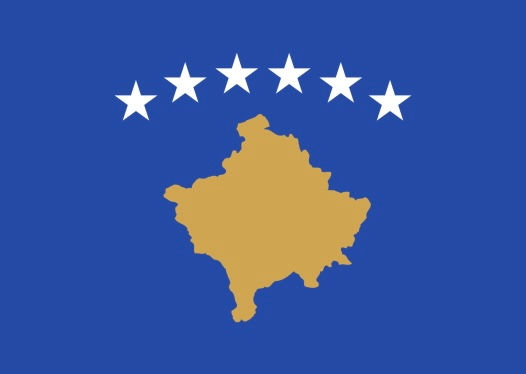
Next day. On the way to Pristina , capital of Kosovo.

It's a country not yet recognized by the UN as a true state, but it's actually making the most progress, thanks to help from Europe (the euro is the currency here, including Montenegro) and the USA. For example, there's a statue of Madeleine Albright , US Secretary of State under Bill Clinton. And a lettering "New Born" serves as an optimistic symbol of their faith in the future as the newest state in the Balkans. The nail-made statue " Heroine " is touching, dedicated to the women who played heroic roles during past conflicts. Coincidentally, the President of Parliament arrives at that very moment to lay a wreath, along with some honorary protocol. We are practically the only witnesses.

Pristina has been inhabited since the Stone Age of the Vinca culture and is therefore an archaeological and historical site in itself. A wide promenade leads to, yet again, a statue of Skanderbeg. Next to his equestrian statue, modern government buildings are claiming their place in the future. I also spotted a mural of pop star Dua Lipa , who turns out to be Kosovar. Finally, we walk past the National Library, " arguably the most ugly building " in the Balkans, according to many.

Hmm, I don't think so myself. So what about all those old communist monstrosities left over everywhere? But a little further on, Mother Teresa's Cathedral, with its two slender towers, exudes a more refined charm.
We're driving to Prizren, the cultural capital of Kosovo. It suddenly rains heavily during the drive. However, the temperature remains pleasant, 26-28°C, even in the evenings. The town is charming, with a small river, the Bistrica , almost dry, running through the center with its bridges (including the Stone Bridge of Love , which I'm pictured with a cat), terraces, a hillside lined with houses, the Sinan Pasha Mosque, the Bazaar (handicrafts, perfumes)... I have lunch with a delicious lamb sausage and some salad.

We visit a small ethnographic museum (traditional costumes, paintings) and a historical spot, the House of the League , where mainly important politicians, men with luxuriant moustaches and fezzes, dominate the display cases and bear witness to the struggle for independence.
Then on to Shkodër at Lake Šcadar . We briefly cross back into northern Albania. We pass Lezhë on the Buna River, with its castle and the tomb/mausoleum of national hero Skanderbeg. In the evening light, the mountain peaks become photogenic. Under the shadow of Rozafa Castle lies Shkodër, one of the oldest cities in Europe. Just outside our Hotel Mozart , we take a delightful evening stroll along a promenade, packed with terraces, atmosphere, and exuberant conviviality. The pastel-colored houses radiate Italian frivolity. At the town hall, I return. I'm sinning, because I wasn't going to drink this week—one beer, a walk, wallow in blissful contentment, shower, and pull my sheets up over my head.

The next day promises to be the most intense trip. First stumbling block: border control.

According to Xjulio, Montegríans are rather lazy and slow. Which, indeed, results in a terribly muddled, creeping border traffic jam. But even worse… there is actually only one road between Albania and Croatia through Montenegro, which is a tourist spot in itself. This road has largely only two lanes, most of which are closed due to roadworks that, according to Xhulio, are really not progressing well. Which could be true. I don't see anyone working along the roadworks. Cringe-inducing. In addition, Kotor (founded in the 6th century BC) with its lovely bay is a super tourist attraction, with consequently far too many buses, and so on. We parked well before the center, because any closer would be pointless. As I approached, I took some beautiful pictures of the bay, which revealed an MSC cruise ship docked there and a German Mein Schiff at anchor.

The medieval town, with its ramparts (4.5 km, longer than Dubrovnik), narrow winding streets, squares brimming with terraces, and a few historic buildings, has a charming charm and the same touch of romance that makes my hometown of Bruges irresistible. The old fortress has three gates, including the Sea Gate , a symbol of resistance and liberation in 1944.
The old town boasts numerous churches, monasteries, and palaces. The feeling of Dubrovnik is never far away. The resemblance to the Venetian period of rule in the 15th and 16th centuries is palpable everywhere. Defensive walls extend above the city, a veritable ring of forts all the way to the hilltop, culminating in Fort St. John (1,350 steps!). These are fortifications built during the Venetian period of

trade wealthfare, had to prevent the city from becoming prey to invaders . Because Kotor, with its unique bay, was once an important, flourishing and strategic trading center.
There are plenty of people around, and there's quite a bit to see. But what strikes me as more pathetic is the traffic that has to endure on that central artery beneath the fortress walls, the masses of buses and other traffic. I once enjoyed cruises arriving from the Baltic , which provided a wonderful panoramic experience, a Mediterranean fjord feeling . And especially sailing around the tiny, charming island of Perast. Look, that's one of the most uniquely beautiful things cruising can offer. More manageable than all those "Blue Cave Boat Tours" that visit various spots in the bay (three hours/€40), albeit with speedboats and all that.
The return trip to Tirana promises some more highlights. We drive along the Riviera full of

Coastal towns with rocky beaches, of which Budva is the most worthwhile, although a tourist resort. We stroll through the marina to the old town with, once again, typical narrow streets, historic buildings, Roman ruins and fortifications, and here and there, in strips along the seafront, holidaymakers sunbathing and swimming. A little further along the way, I enjoy the (protected) mini-peninsula of Sveti Stefan and the surrounding bays, where Tito's summer residence is located, making it clear why he chose this place. After long, winding roads, via Bar and Petrovac, and difficult traffic, a—phew—modern highway quickly brings us to Tirana.

I booked a room at the International Tirana Hotel on the spot Monday evening for this last day, €82 with a 12th-floor view of Skanderbeg Square —my balcony on the Balkans—but it's already late, and I have to get up at 5:15 to catch my shuttle bus and flight. Another passport check awaits me there, and another one in Charleroi. That makes nine checks out of five. Constantly frustrating queues. And the talk that Schengen might be under pressure again. And we curse Europe. But these countries want nothing more than to be part of it. Although still surrounded by myths, local traditions, and old customs, they yearn for progress. There's still a fair amount of construction work to be done. But the goodwill is there.

©WimVanBesien2025


Comments